Current Population and Economic Development in Bulgaria and the Black Sea Coast
Bulgaria is currently in a phase of economic transformation and demographic change. While the country is moving closer to the EU economically through the Euro introduction in early 2026 and Schengen accession in 2025, the sharp population decline continues.
1. Population Development: A Shrinking Nation
Bulgaria is considered one of the fastest-shrinking countries in the world.
- Total Population: The population stands at approximately 6.67 million in 2026. For comparison: in 1980, it was nearly 9 million.
- Reasons: A combination of low birth rates (8.58 per 1,000 inhabitants in 2025), high emigration of young skilled workers, and an aging society.
- Age Structure: The proportion of people over 65 is continuously rising and is estimated to exceed 22% for 2025.
2. Economic Development: Dynamics Despite Hurdles
Despite the demographic crisis, the Bulgarian economy shows remarkable resilience and often records growth rates above the EU average.
- Growth & Inflation: Real GDP growth of approximately 3.0% to 3.2% is projected for 2025. Inflation significantly stabilized in 2024 at around 2.6%.
- Monetary Union: Since January 1, 2026, the Euro has been the official currency, eliminating exchange rate risks and lowering transaction costs for trade.
- Real Estate Market: Bulgaria recently recorded one of the highest increases in residential property prices in the EU (over 18% year-on-year at the end of 2024).
3. Focus on the Black Sea Coast: Tourism and Regional Trends
The Black Sea region is the economic engine for the tourism sector and a magnet for foreign residents.
- Tourism Boom: At the end of 2025, Bulgaria saw a strong increase in tourist arrivals (+6.6% in December compared to the previous year). The removal of border controls due to Schengen accession has significantly eased travel for EU citizens.
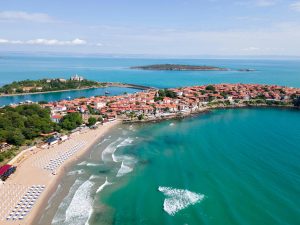
- Popular Locations: The coastal cities of Varna and Burgas, as well as resorts like Sunny Beach, Golden Sands, and Nessebar, are centers for investment.
- Foreign Influx: While the local population is shrinking, there is a trend of foreigners moving to Bulgaria (especially from Germany and the UK), driven by lower living costs and tax advantages.